Trenton talks Special Bird Services, Mental Health and Community
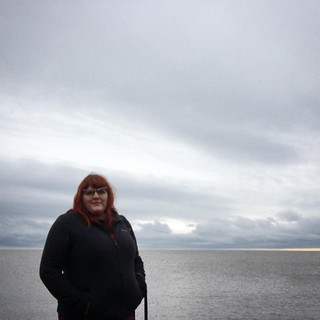
Name: Trenton Schulz-Franco
Pronouns: they/he
Location: Coast Salish Territory
Occupation: Lands Coordinator, Legal Ecologist & Photographer
Tell us a bit about yourself and about Special Bird Services, how you are involved?

I’m 30 years old, I’m a legal ecologist and community, research at development lead at SBS and lands coordinator at a regional land trust here on southern Vancouver island called Habitat Acquisition Trust or HAT! Special Bird Service is a not for profit, family founded, volunteer run, community-led project focusing on providing equitable access to recreation, education and stewardship opportunities for our Global Majority & 2SLGBTQIA+ communities here, on the Salish Coast.
What interested you in participating in your project?
I founded this project with my brother and 2 of my cousins, 5 years ago as a way to address the needs in our communities for nature-based, mental health-centered and culturally informed programming. We use birding as a gateway hobby to folks caring more about the environment! We started as 7 individuals, 5 of them my family members and we’ve grown to support equitable access to nature for over 5000 people in 5 years across what is now now known as British Columbia.
Do you mind sharing your mental health diagnoses or conditions?
I have been diagnosed with depression and anxiety, birding feels like one of the main reasons why I’m able to cope with and manage the day to day symptoms by feeling present and grounded. I find birding a highly meditative practice.
What factors contributed to you developing mental health conditions or illnesses?
I had trauma from car accident about 10 years ago as well as familial history of mental health. Mental health is something very close to my heart as I believe it affects and informs everyone in some way or shape or form.
When did you become interested in birds and birding?
5 years ago during Covid, I’ve always loved birds, I grew up on a bog and remember looking through the owl pellets left by a great horned owl at the end of my parents drive way, or when my mom saved some baby ducklings who got caught on bramble thorns. It’s hard to say exactly but one of those experiences is probably when my fixation landed so to speak.

How has birding helped you in processing or healing with your mental health?
It’s allowed me something to fixate and focus on, something to lose myself in and endlessly learn about. It’s helped me find community of people also interested in doing so, and it’s helped me meet my lifelong best friends now. Birds are fantastic stewards of their environments, so if I can better understand them, maybe I can better understand how I can become a better steward of my environment, in turn.
How has birding helped you in your daily life? Long-term?
Yes, it helped me get my job, it helps me meet my best friends, it helped me find my and create for my communities at SBS.
Are you involved in your local birding community? Has that helped or hindered you in any way?
I created my own path with SBS, I had no contact prior to creating SBS, with my local birding community, they’ve been pleasant to interact with for the most part, besides the inherent racism, classism, and discriminatory practices built into so many similar 21st century systems and structures.
We saw a need for equitable access to education, recreation and stewardship
opportunities that are bird focused for my communities and we flew with it. I’ve met some incredible people and we’ve teamed up to start equitable, accessible and amateur focused ornithological skills through and organization called South Island Bird Research Network, founded by my colleagues Samuelle & Rebecca, we’re excited to offer hands on, field and technical skills to youth, students and the Global Majority through our partnership.
What do you think some of the barriers are to people finding birding an accessible tool to use for improving their mental health?
Time to not be at work, money so as to not have to work, the vastly shrinking natural habitat we steward, like our ever-scarer Garry Oak ecosystem and the constant urban sprawl marred with the accessible and equitable housing supply issues. Not to mention the multiple genocides and forced displacements currently ongoing in the world. People often have too many things to worry about before they can worry about birds or their mental health.
What is your favourite way to bird or go birding?

With my binoculars and my camera, and my friends from SBS. Going to see as much as we can, with a target in mind but an open mind and a whole lot of free time.
Do you believe there is something specific birds have to teach us?
Birds are stewards of their environments, they live reciprocally with their environments. If we can learn and better understand how birds are reciprocal stewards of their environments, then we can learn how to be better stewards of our environments, ourselves!
Does birding ever affect your mental health negatively?
The only negative aspect of birding or aspects of competitiveness and win-lose/ black and white thinking of some birding communities, is that sort of environment and attitude can often be toxic, exclusionary and discriminatory. Which negatively affects community members & our collective mental health when birding.
Is there a birding story that makes you instantly smile?

Discovering the first Black Swift Group Nesting site on Vancouver Island, known to Western Science, in August of 2024 with 3 fellow SBS members Alyana, Jeremiah and Simun.
What bird song immediately lifts you up and why?
The varied thrush, any swifts chirpy flight calls & the yellow headed black birds wild cackle-like calls.

What recommendations would you give to someone getting started using birding for their mental wellness?
Don’t use it, build a relationship with it, interact with birds, your environment, develop a deeper relationship, learn about native plants, learn about the bugs that call those native plants home, learn about the fish & the birds that eat those bugs that call those plants home, then learn about the raptors that eat those birds, that eat those bugs that live in those native plants. Realize you are a part of the ecosystem rather than apart from it.
If you could give one message to mental health care providers about birding and why they should recommend it to clients what would it be?
Birding is a low-barrier, evidence-supported practice that simultaneously supports mental, physical, and social health—and it should be prescribed with the same seriousness as other behavioural interventions.
It gently combines time in nature, focused attention, learning, movement, and community connection. Together, these elements reliably reduce stress physiology, support mood regulation, and foster a sense of meaning and interconnectedness. Birding does not require athleticism, expensive equipment, or prior knowledge, and it can be adapted for clients across ages, abilities, cultures, and neurotypes. In short: it creates the conditions in which nervous systems can settle, curiosity can return, and people can experience joy without pressure to “perform wellness.”
If you could convey one message to the birds, what would it be?
We see, we hear and we love you. We’re trying to learn from and with you, we appreciate your patience and we thank you for your trust in us.
Thank you for sharing your story with us Trenton! If you would like to share your story, please reach out!


Comments